

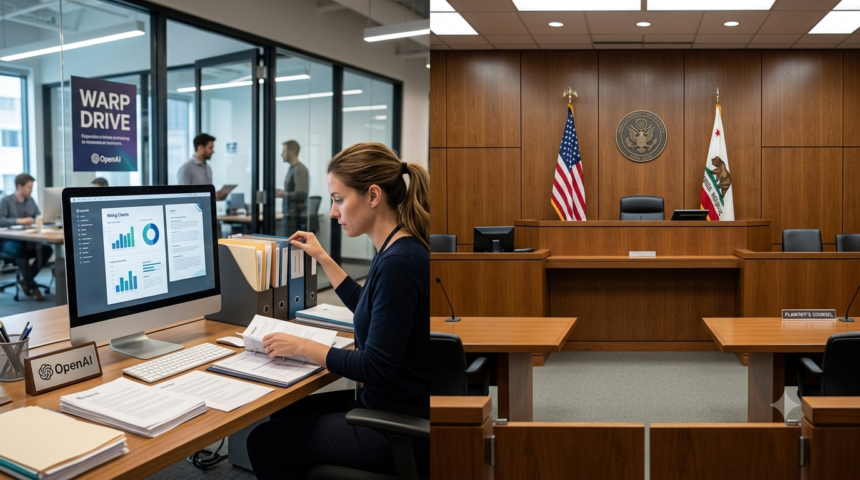
A legal dispute between Apple and OpenAI has entered a new phase after a U.S. federal judge ordered OpenAI to provide hiring-related documents connected to former Apple employees. The decision could bring additional scrutiny to how technology companies recruit experienced talent while protecting confidential business information.
The ruling, issued on October 13, 2026, grants Apple expedited access to specific interview materials as part of its trade secrets lawsuit against OpenAI, originally filed in July.
Court Orders Faster Access to Recruitment Documents
The court has directed OpenAI to share documents relating to interviews with former Apple employees who applied for positions in its consumer hardware and robotics teams. The requested materials may include interview guides, checklists, scripts, technical presentations, and records of discussions involving Apple technologies or components.
OpenAI has five days to provide materials it has already collected and 14 days to submit additional documents covered by the request.
- Advertisement -
The decision does not mean the court has established that trade secrets were stolen. Instead, it allows Apple to examine specific evidence that could help determine whether its allegations have merit.
What Is Apple Alleging Against OpenAI?
Apple filed its lawsuit in July 2026, accusing OpenAI of improperly obtaining confidential company information through former employees.
According to Apple’s allegations, certain former employees used Apple laptops to download confidential files containing details about unreleased products, upcoming features, technical specifications, engineering presentations, and internal projects.
Apple has also alleged that some former employees working at OpenAI advised colleagues who were considering leaving Apple about information to bring into their interviews.
These claims remain allegations within an ongoing legal dispute. The court’s latest order concerns evidence collection rather than a final determination of responsibility.
- Advertisement -
Former Employees and Hardware Leadership Under Scrutiny
The judge also approved depositions involving three former Apple employees: OpenAI employees Chang Liu and Alyssa Peng, along with OpenAI Chief Hardware Officer Tang Yew Tan.
In addition, Apple received permission to access private LINE messages between individuals identified in the case, including Liu and Peng. These communications may provide further context about recruitment discussions and the circumstances surrounding the employees’ transitions.
However, the court did not approve every request submitted by Apple. Judge Edward Davila rejected expedited access to certain OpenAI research and development materials, including work involving metal finishes and power management.
- Advertisement -
The judge also declined several broader discovery requests concerning OpenAI’s hardware research and the work former Apple employees produced after joining the company. Apple may submit narrower requests in the future.
Why the Case Matters for AI Hardware
The dispute arrives as OpenAI explores consumer hardware opportunities that could change how people interact with artificial intelligence. A dedicated AI device could potentially compete with established consumer technology products if it becomes an important part of everyday digital experiences.
For technology companies, developing new hardware requires more than software expertise. Product design, component engineering, manufacturing knowledge, power management, and user experience can all provide a competitive advantage.
That makes employee mobility and intellectual property protection especially important. Experienced professionals naturally carry their skills and general industry knowledge between employers, but confidential documents and protected trade secrets raise different legal concerns.
The case highlights the challenge of distinguishing legitimate recruitment and knowledge transfer from the potential misuse of proprietary information.
What Technology Businesses Can Learn
The dispute offers several practical lessons for businesses hiring employees from competitors.
Strengthen onboarding procedures: Companies should clearly communicate policies regarding confidential information and prohibit employees from bringing unauthorized documents from previous employers.
Document recruitment practices: Consistent interview processes and clear guidelines can help demonstrate that hiring decisions are based on professional experience and relevant skills rather than access to proprietary information.
Protect sensitive data: Access controls, employee training, and internal reporting procedures can reduce the risk of confidential information entering company systems.
Review intellectual property policies: Businesses operating in competitive industries should regularly assess their employment agreements, data-handling practices, and compliance procedures.
The Bigger Picture
The latest ruling gives Apple access to a defined set of recruitment-related evidence, while leaving other discovery requests unresolved. The next stages of the case may clarify what the records show and whether Apple’s allegations can be substantiated.
For the wider technology industry, the dispute serves as a reminder that innovation, recruitment, and intellectual property protection are increasingly interconnected. As AI companies expand into hardware, maintaining clear boundaries around confidential information will remain an important business priority.