


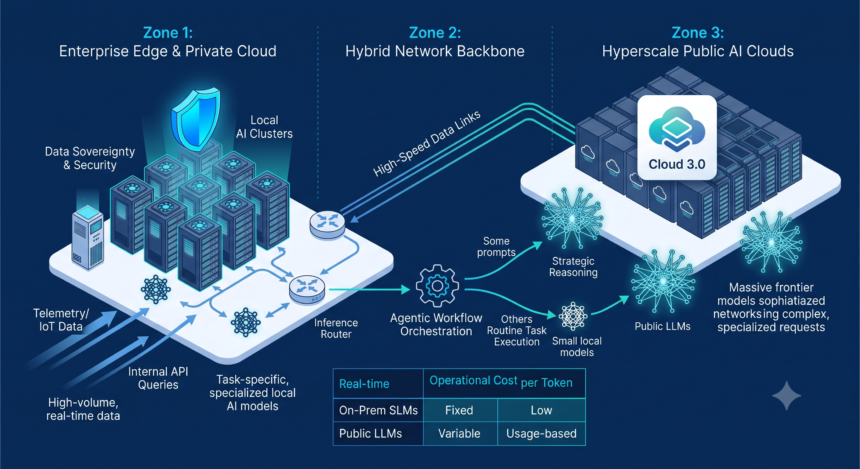
The conversation around artificial intelligence in B2B technology has fundamentally shifted. The era of basic generative text pilots and tactical chat assistants is over. Enterprise leaders are no longer asking what AI can generate; they are evaluating how autonomous AI systems can systematically rebuild core operational workflows, software architecture, and go-to-market strategies.
Today’s business landscape is defined by the rise of Agentic AI—autonomous enterprise software capable of reasoning, executing complex multi-step workflows, and collaborating across human-machine teams.
From autonomous procurement protocols to self-assembling software pipelines, artificial intelligence is shifting from an additive tool to the foundational backbone of digital business. For B2B technology executives, understanding this architectural shift is no longer optional—it is the baseline for competitive survival.
1. The Death of the Tactical Copilot: Enter Agentic AI
For years, enterprise AI deployment meant placing a conversational “copilot” alongside human workers. While helpful for drafting emails or summarizing meeting transcripts, these systems remained entirely passive: they waited for a human prompt and required manual verification at every step.
- Advertisement -
Agentic AI changes this dynamic entirely. Instead of waiting for instructions, AI agents operate with delegated autonomy. They evaluate intent, break complex initiatives into operational sub-tasks, interact with third-party APIs, and execute end-to-end business logic with minimal human intervention.
  [ Human Business Intent ]
              │
              ▼
    ┌───────────────────┐
    │  Agentic AI Core  │  ◄── (Reasoning & Orchestration)
    └─────────┬─────────┘
              │
    ┌─────────┼──────────┬──────────┐
    ▼         ▼          ▼          ▼
┌──────┐  ┌──────┐  ┌────────┐  ┌──────────┐
│ CRM  │  │ ERP  │  │ Intent │  │ Security │
│ APIs │  │ APIs │  │ Engine │  │ Governance│
└──────┘  └──────┘  └────────┘  └──────────┘
From Task Automation to Process Orchestration
Traditional robotic process automation (RPA) was rigid—if a UI element changed or an unexpected data payload arrived, the execution broke. Agentic AI platforms combine probabilistic reasoning with deterministic execution.
- Autonomous Lead Qualification & Pipeline Routing: Instead of scoring leads using static threshold rules, agentic models analyze intent signals across multiple buyer touchpoints, conduct independent account research, and proactively execute personalized outreach sequences.
- Dynamic Supply Chain Negotiation: B2B procurement agents are beginning to negotiate contract terms, verify catalog pricing, and re-route inventory requests autonomously across supplier APIs based on changing market conditions.
- Self-Healing Infrastructure: In software engineering, autonomous agents monitor telemetry logs, diagnose code regression issues, write patch code, and run integration tests—substantially reducing technical debt.
Key Takeaway for B2B Leaders: The primary goal of enterprise AI deployment is no longer worker augmentation—it is workflow orchestration. Organizations automating legacy, broken processes will simply accelerate inefficiencies. Operational processes must be redesigned from the ground up for agentic execution.
2. Infrastructure Reckoning: Inference Economics & Cloud 3.0
As autonomous agents proliferate across enterprise workflows, B2B organizations are colliding with a new architectural bottleneck: Inference Economics.
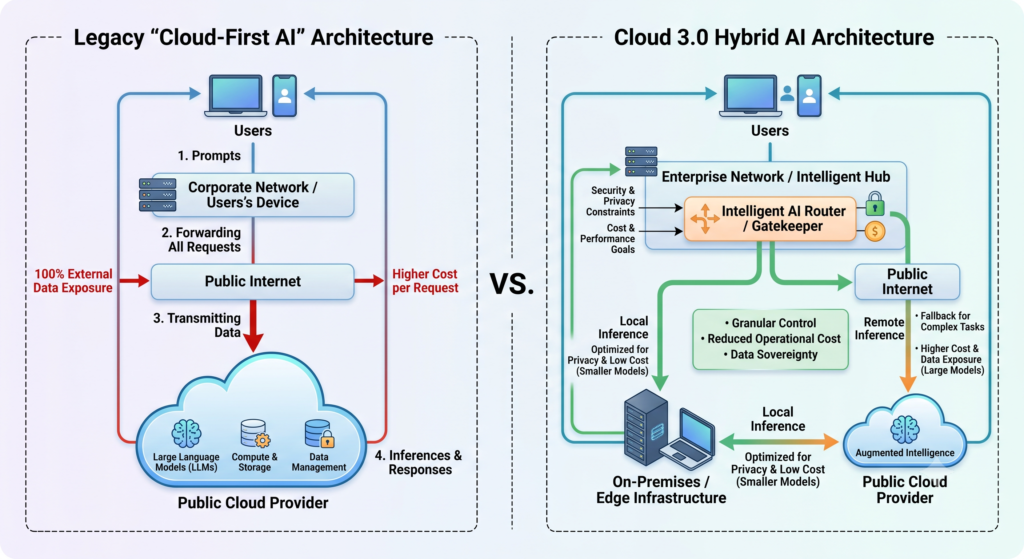
While raw token costs have plummeted, enterprise usage has exploded exponentially. Running heavy foundation models across thousands of daily operational tasks creates escalating API bills and infrastructure latency. This reality is forcing a major transition toward Cloud 3.0.
- Advertisement -
The Shift to Hybrid Model Deployment
Relying exclusively on hyperscale public clouds for every AI query creates unacceptable cost variances and data governance risks. Modern enterprise AI architecture relies on a diversified, hybrid approach:
- Small Specially-Trained Models (SLMs): Task-specific, open-source models (3B to 14B parameters) trained on proprietary company data are deployed on-premises or via private cloud instances. They handle 80% of routine workflows at a fraction of the cost with near-zero latency.
- Hyperscale Cloud Foundation Models: High-parameter frontier models are reserved strictly for complex logical reasoning, edge-case resolution, and multi-modal analysis.
- Edge Computing for Real-Time Execution: Time-sensitive inference—such as manufacturing quality assurance or real-time cybersecurity threat isolation—occurs at the network edge to bypass cloud routing latency entirely.
| Infrastructure Layer | Primary Enterprise Use Case | Key Advantages | Cost & Performance Profile |
| Edge Compute | Real-time threat detection, IoT telemetry, localized robotics | Zero latency, offline capability | Fixed hardware expenditure; ultra-fast inference |
| Private Cloud / On-Prem SLMs | Document parsing, internal code assist, intent classification | High data security, total model control | High upfront setup; predictable long-term operational cost |
| Public Multi-Tenant LLMs | Complex strategic analysis, multi-agent orchestration | Frontier-level capability, dynamic scale | Pay-per-token model; variable operational expenditure |
3. The New B2B Go-To-Market Engine: Signal-First Precision
The impact of AI on B2B go-to-market (GTM) functions has reached a tipping point. Traditional spray-and-pray outbound marketing and static lead scoring have lost effectiveness. Modern B2B buyers now use AI search platforms and internal research bots to evaluate software vendors before ever speaking to a sales representative.
Moving Beyond MQLs to Committee Intent Signals
In complex enterprise technology sales, buying decisions are rarely made by individuals; they are driven by consensus committees ranging from 5 to 16 stakeholders (including CIOs, Security Directors, and Procurement Officers).
- Advertisement -
AI-driven GTM platforms continuously map these buying groups by synthesizing real-time data streams:
- First-Party Data Integration: Tracking anonymous content engagement across high-value documentation pages.
- First-Look Intent Signals: Identifying when multiple executives from the same target organization research specific technology categories or competitor platforms.
- Technographic & Hiring Changes: Flagging when a prospect hires leadership in key technical areas or changes their cloud infrastructure stack.
  [ Data Stream 1: Intent Signals ] ──┐
  [ Data Stream 2: Tech Changes   ] ──┼──► [ AI Scoring Engine ] ──► [ Tailored Committee Outreach ]
  [ Data Stream 3: CRM Context    ] ──┘
Instead of sending generic outbound campaigns, agentic GTM platforms dynamically construct personalized collateral tailored specifically to each committee member’s core pain points—addressing security architecture for the CISO, ROI metrics for the CFO, and developer ergonomics for the VP of Engineering.
4. Operational Risk, Governance, and Ethical Deployment
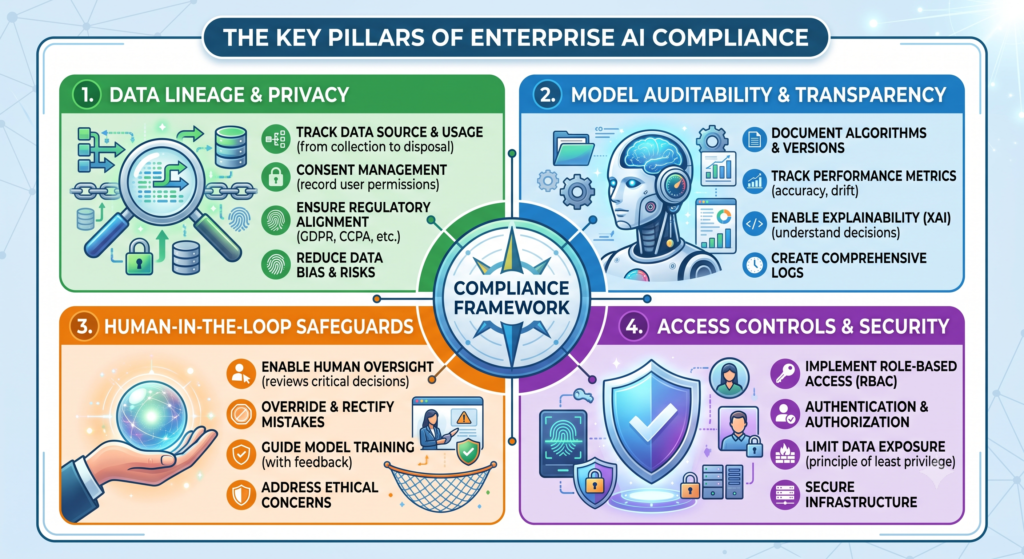
While the strategic benefits of enterprise AI integration are clear, scaling autonomous systems introduces significant operational risks. Unregulated AI deployment can result in data exposure, algorithmic bias, and major compliance failures.
The Four Pillars of Safe AI Scale
To capture the efficiency of autonomous systems without incurring organizational risk, technology leaders are deploying strict AI Governance Frameworks:
- Zero-Trust Model Data Boundaries: Enterprise data must never be used to train public multi-tenant models without explicit tokenization and differential privacy safeguards.
- Deterministic Guardrails & Human-in-the-Loop (HITL): High-stakes operational actions—such as executing financial transactions, issuing legally binding contracts, or modifying production infrastructure—must mandate human authorization.
- Continuous Algorithmic Auditing: AI decision-making paths must be fully logged and auditable to prevent dynamic drift, biased outputs, or hallucinated logic from leaking into production workflows.
- Regulatory & Sovereign Compliance: Data residency regulations require enterprise platforms to enforce sovereign cloud boundaries, ensuring AI processing occurs strictly within specified geographical and regulatory zones.
Strategic Roadmap: Architecting the AI-Native Enterprise
Transitioning an enterprise from tactical AI pilots to a unified, agentic operational model requires structured execution.
Phase 1: Audit and Consolidate Data Infrastructure
AI models are only as effective as the underlying data they access. Organizations must consolidate fragmented data silos, clean legacy records, and implement unified data access controls. Without clean first-party data, enterprise agents will simply automate bad decision-making at scale.
Phase 2: Redesign Workflows for Agentic Orchestration
Identify high-friction, multi-system workflows—such as complex enterprise onboarding, automated technical support tiering, or account-based marketing orchestration. Redesign these processes specifically for human-agent collaboration rather than simply layering tools over existing steps.
Phase 3: Implement Hybrid Compute & Infrastructure Routing
Establish a multi-tiered infrastructure model. Deploy task-specific, small language models for high-volume internal tasks while reserving top-tier public cloud LLMs for complex, high-reasoning requirements. This maintains cost predictability while maximizing capabilities.
Phase 4: Enforce Continuous Governance & Performance Benchmarks
Establish cross-functional AI oversight committees comprising legal, technical, and operational leadership. Shift key performance metrics away from vanity engagement scores toward meaningful business outcomes: pipeline velocity, mean-time-to-resolution (MTTR), and infrastructure efficiency.
The modern enterprise is moving past the stage of simple AI experimentation. The organizations that define the future of B2B technology will not merely adopt AI software—they will build robust, intelligent architectures that leverage autonomous orchestration, hybrid infrastructure, and trusted data governance to scale value efficiently.