


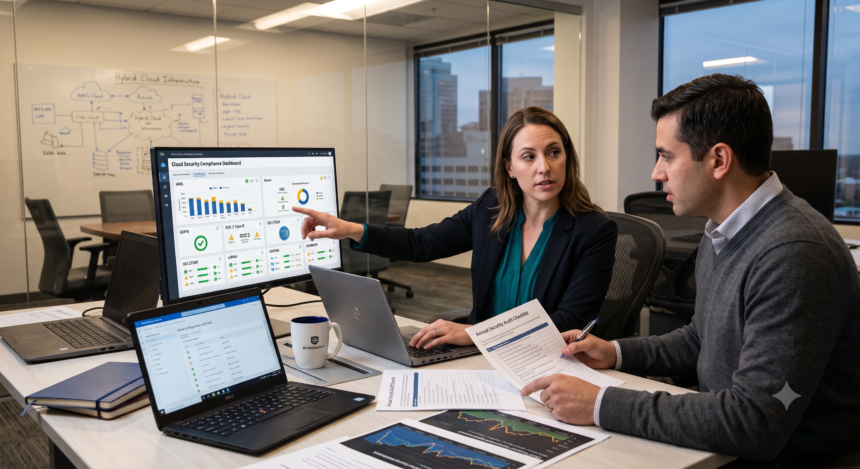
The cloud security landscape is shifting faster than ever. For enterprise organizations, staying compliant is no longer just an annual checkbox—it is a continuous operational requirement. With regulatory bodies worldwide tightening their grip on data privacy, falling behind can mean steep fines, operational bottlenecks, and fractured client trust.
Over the last few quarters, we’ve seen major updates to global frameworks. The focus is increasingly on cross-border data transfers, stricter breach reporting timelines, and the integration of AI within enterprise infrastructure. Regulators are demanding rigorous oversight into where data lives, exactly who has access to it, and how it is secured both in transit and at rest.
So, how can businesses ensure their hybrid and multi-cloud environments remain compliant amid these moving targets? The answer lies in transitioning from reactive scrambling to proactive, continuous auditing.
Here are three critical steps to future-proof your infrastructure:
- Advertisement -
1. Map Data Flows and Eliminate Silos You cannot secure what you cannot see. Begin by mapping out exactly where your sensitive data resides. It is dangerously easy for teams to lose track of data silos spread across various enterprise software platforms and databases. A thorough audit starts with a clear, documented understanding of your entire data lifecycle.
2. Enforce a Zero-Trust Architecture Modern compliance frameworks are overwhelmingly favoring Zero-Trust models. It is time to fully move away from perimeter-based security. Ensure that every single user, device, and application is continuously authenticated and authorized before granting access, effectively minimizing the blast radius of any potential configuration error.
3. Automate Your Compliance Posture Manual audits that rely on cross-referencing dense compliance whitepapers with scattered spreadsheets are highly prone to human error and rapidly become obsolete. By implementing automated cloud security posture management (CSPM) tools, teams can continuously scan configurations against current regulatory frameworks, flagging vulnerabilities in real-time.
Navigating these regulatory changes requires translating dense, complex requirements into clear, actionable engineering tasks. By embedding continuous auditing into your daily architecture management, your organization can move faster, innovate safely, and build lasting trust.