


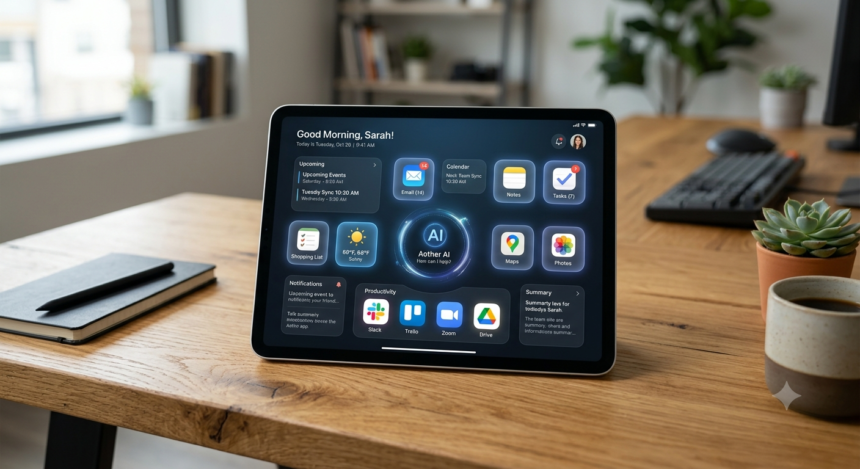
Meta is moving quickly to establish its presence in the growing consumer AI agent market. The company has now brought its Muse AI assistant to the iPad, less than a month after launching the application on iPhone and Android.
The dedicated iPad release gives users a larger-screen experience for an AI assistant designed to do more than simply answer questions. Muse can connect with different online services and help users manage everyday digital tasks, including emails, meetings, bills, purchases, reservations, grocery orders, and personal goals.
The speed of the iPad rollout is notable. While some major consumer apps have taken years to build dedicated iPad experiences, Meta has moved Muse onto Apple’s tablet platform shortly after its initial mobile launch. The text-focused nature of the assistant may also make the transition to a larger screen relatively straightforward.
Muse Is Building Early Consumer Momentum
Muse launched on iOS and Android on September 8, and market intelligence estimates indicate that it has already reached more than 6.6 million installs.
- Advertisement -
The numbers highlight the growing interest in AI agents that can perform actions rather than simply generate information. Instead of requiring users to move between multiple applications and websites, Muse is designed to act as an intermediary that can carry out selected tasks on their behalf.
A major part of that functionality comes through integrations known as connectors.
Users can choose which services Muse can access, allowing them to decide which areas of their digital lives they are comfortable placing under AI assistance. This approach gives Meta a way to expand Muse’s capabilities without requiring every function to be built directly into the application.
More Tools Are Coming to Muse
Meta has continued expanding its connector ecosystem, particularly for professional and business-related workflows.
Recent additions include platforms such as Asana, Canva, Dropbox, Figma, QuickBooks, GitHub, Klaviyo, and Zoom. Meta has also added Notion and Granola, along with connections for Meta advertising accounts.
- Advertisement -
These integrations could make AI agents increasingly useful for professionals who spend their day moving between productivity, marketing, collaboration, and business applications.
Muse is also expanding into online shopping. Partnerships involving retailers such as Best Buy, Gap, Sephora, Walmart, and Wayfair allow the AI agent to interact with participating retail websites and complete purchases for users.
However, agent-driven commerce still faces a significant technical challenge. Websites can identify automated agents as bots and restrict their access, potentially preventing an AI assistant from completing an otherwise legitimate task.
- Advertisement -
The Bigger Challenge: Helping AI Agents Work With Businesses
Meta is also working with industry partners on a broader solution to this problem.
The company has announced work on an open standard that could allow personal AI agents to identify themselves when interacting with businesses. The goal is to help websites distinguish legitimate personal assistants from malicious or unwanted automated bots.
If widely adopted, such a system could become an important piece of infrastructure for the emerging AI-agent economy.
Meta’s rapid expansion of Muse suggests that the company sees AI agents as more than another chatbot category. By combining mobile access, iPad support, third-party integrations, business tools, and shopping capabilities, Meta is positioning Muse as an assistant capable of taking action across a user’s digital ecosystem.
The next stage will depend on whether these agents can perform those tasks reliably, securely, and with enough trust for people to hand over increasingly important parts of their daily online activities.