


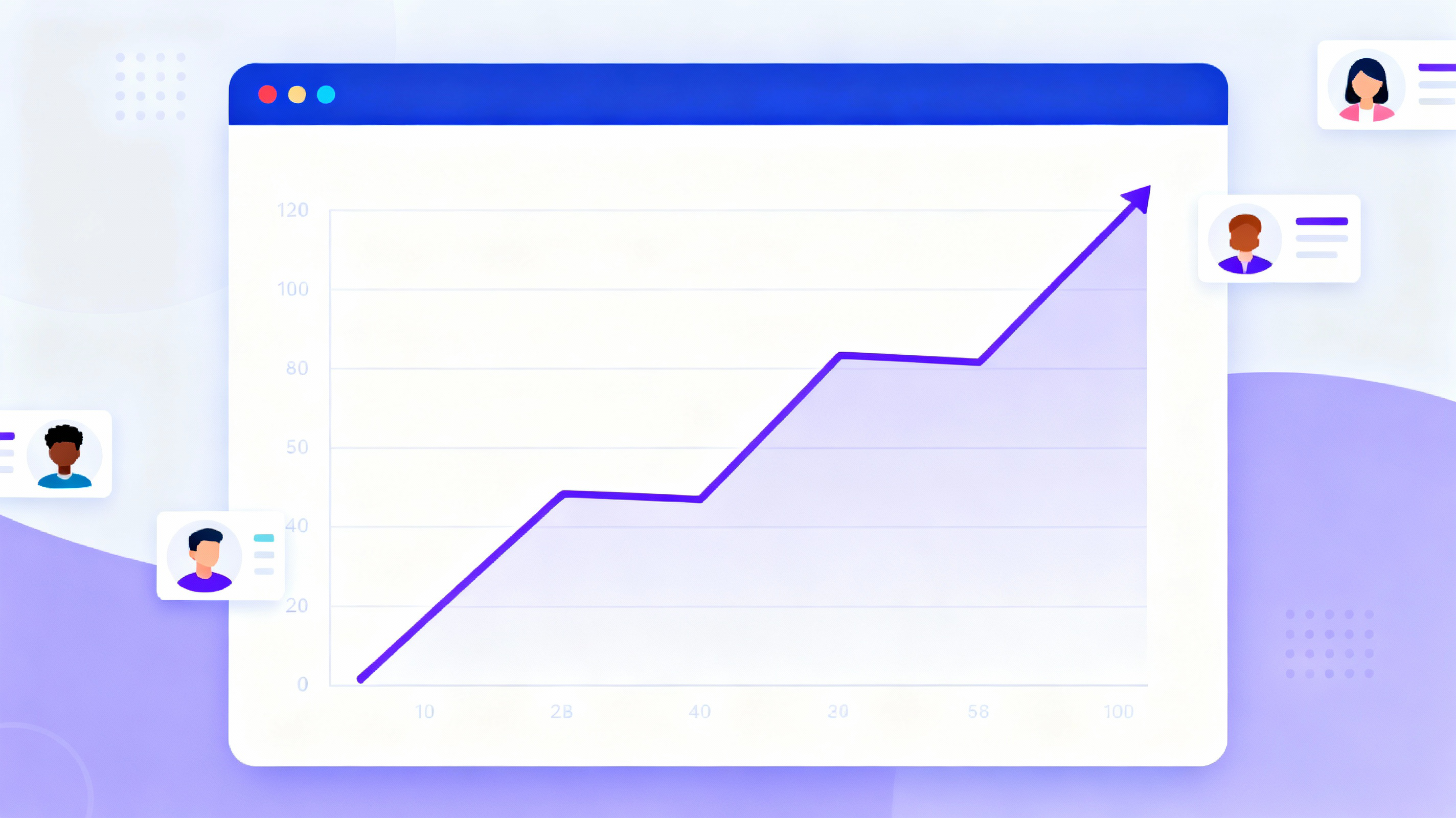
Most websites do not need more traffic; they need to do more with the visitors they already have. With a few focused tweaks, you can turn your existing traffic into a steady stream of qualified leads—without touching your ad budget.
1. Clarify Your Main Offer Above the Fold
When someone lands on your site, they should instantly understand what you do, who you do it for, and what action to take next. Replace vague taglines like “We build digital experiences” with a clear, benefit-driven statement such as “We design and develop B2B websites that convert visitors into sales calls.”
Add one primary call to action (CTA) in this section—“Book a strategy call,” “Request a quote,” or “Get a free teardown”—and remove competing buttons that distract from this action.
2. Fix Weak or Generic CTAs
“Contact us” is not a compelling reason to click. Turn your CTAs into specific promises tied to outcomes or deliverables, for example, “Get your free website conversion audit” or “Send me the 15‑point checklist.”
Use different CTA intensities across the site: low-commitment (download, checklist), medium-commitment (audit, consultation), and high-commitment (proposal, demo), matched to the visitor’s readiness.
3. Shorten and Simplify Your Forms
Every extra field in a form is a reason to abandon it. Review your key lead forms and ruthlessly remove any field you do not actively use in qualification or follow-up.
Aim for the minimum: name, email, and one context field (e.g., website URL or company name). You can always ask for more information later in the process once trust is built.
4. Add Social Proof Near Decision Points
People take action when they feel confident others have succeeded before them. Place testimonials, review counts, or mini case study snippets directly beside your CTAs and forms, not hidden on a separate page.
Highlight specific outcomes (“42% more demo requests in 90 days”) and the type of client (“B2B SaaS, Series A”) so visitors can see themselves in the example.
5. Make Your Pages Load Fast and Look Great on Mobile
A slow or clunky page quietly kills conversions, especially on mobile. Compress images, remove unnecessary scripts, and test your key pages on a real phone, not just in a desktop browser.
Check that forms are easy to fill, buttons are tap-friendly, and no important content is pushed below endless banners or popups on smaller screens.
6. Turn High-Intent Pages into Lead Magnets
Some pages signal high buying intent—pricing, services, feature pages, and comparison posts. Upgrade these from “informational” to “conversion” pages.
Add highly relevant offers such as “Get a custom quote,” “Compare plans with an expert,” or “Download a detailed pricing guide,” and ensure these CTAs are visible without excessive scrolling.
7. Capture Exiting Visitors with a Relevant “Fast Win”
Many visitors leave without acting simply because the timing is not right. Use an exit-intent popup or slide-in that offers a fast, specific win tied to the page they’re on—like a checklist, template, or mini guide.
Keep the copy focused on one big outcome (“Fix 5 conversion killers on your homepage in the next 24 hours”) and limit the form to one or two fields to maximize sign-ups.
Wrap-Up CTA (You Can Customize)
If your website is getting traffic but not enough leads, these seven fixes are the quickest levers to pull. Choose one high-impact page, implement at least three of these changes this week, and track the uplift in form fills, calls booked, or demo requests.
To make this even easier, you can offer readers a free “Website Lead Generation Audit” or a downloadable “Conversion Checklist” as the primary CTA at the end of the post.
If you share your specific niche (e.g., “WordPress development for B2B SaaS”), the target audience, and country, a fully SEO-optimized version (with meta title/description, H2/H3s, and internal link ideas) can be tailored for you.