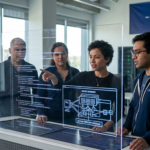



Software development teams are increasingly adopting AI-powered coding assistants to improve productivity, reduce repetitive work, and accelerate application delivery. These intelligent development tools are helping engineers write code, identify errors, generate documentation, and automate testing while maintaining software quality across complex projects.
Technology companies continue integrating AI capabilities into integrated development environments (IDEs), enabling developers to receive real-time coding suggestions, security recommendations, and performance optimization guidance. These tools assist experienced developers while also helping newer programmers learn best practices more efficiently.
Automation is becoming a central component of modern software engineering. Organizations are combining AI-powered coding tools with continuous integration and continuous deployment (CI/CD) pipelines to reduce release times and improve software reliability. Automated testing and code analysis allow development teams to identify potential issues earlier in the software lifecycle.
Security remains a major priority as AI-generated code becomes more common. Software vendors are introducing vulnerability scanning, secure coding recommendations, and governance controls to ensure AI-assisted development aligns with organizational security policies and compliance requirements.
- Advertisement -
Business leaders emphasize that AI is intended to enhance developer productivity rather than replace software engineers. Human oversight remains essential for architecture design, complex problem-solving, and validating AI-generated outputs before deployment.
Industry analysts expect AI-assisted software development to continue expanding throughout 2026 as organizations seek faster innovation and greater operational efficiency. Businesses that combine intelligent development tools with skilled engineering teams are likely to accelerate product delivery while maintaining high standards of software quality and security.